How to Design a Custom custom t-shirts: From Concept to Bulk Production
Design unique custom t-shirts easily & get quality prints! Get factory-direct pricing now!
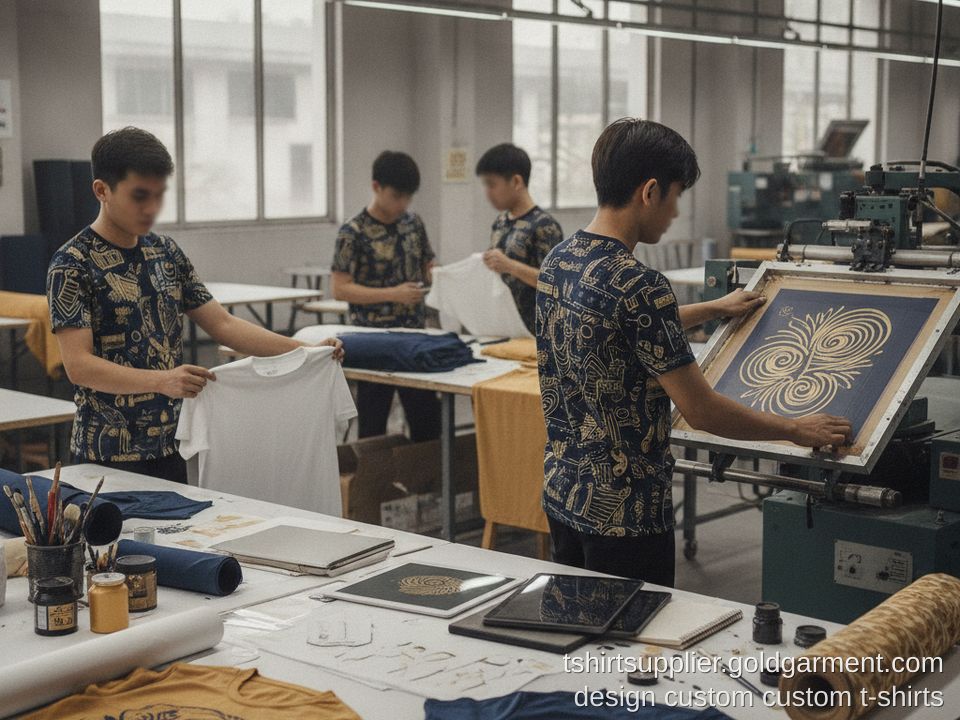
How to Design Custom T-Shirts: From Concept to Bulk Production
Creating a unique line of custom t-shirts can be a powerful way to build brand identity, foster community, or launch a new product. For designers and brand owners venturing into apparel manufacturing for the first time, the process from initial concept to receiving a bulk order can seem daunting. This comprehensive guide will walk you through each essential step of how to design custom t-shirts, ensuring your vision translates seamlessly into high-quality, market-ready apparel. We'll cover everything from conceptualization and artwork preparation to understanding manufacturing requirements and partnering with a reliable supplier.
At T-Shirt Supplier (tshirtsupplier.goldgarment.com), operated by Gold Garment in Ho Chi Minh City, Vietnam, we specialize in bringing your custom apparel ideas to life. With over a decade of experience in OEM, ODM, and private label manufacturing, we understand the intricacies of the production pipeline. Our factory-direct pricing and a low Minimum Order Quantity (MOQ) of just 100 pieces per style, coupled with worldwide shipping, make us an ideal partner for brands of all sizes looking to design custom t-shirts.
A crucial first step in any custom apparel project is a well-defined concept. Before you even think about artwork, consider the purpose of your t-shirts. Are they for a specific event, a promotional campaign, a retail line, or corporate branding? Understanding your target audience and the intended use will guide your design choices, from the style of the t-shirt to the complexity of the graphics. For a deeper understanding of how custom t-shirts are made, explore our article on the complete manufacturing process step-by-step.
Once your concept is clear, the next phase involves translating your ideas into tangible design specifications. This is where detailed documentation becomes paramount. For any garment manufacturer, a comprehensive tech pack is indispensable. It acts as the blueprint for your product, ensuring that every detail, from fabric composition to stitching, is precisely communicated. A well-structured tech pack eliminates ambiguity and minimizes the risk of errors during production. You can find a detailed guide at Vietnam factory tech pack guide.
Phase 1: Conceptualization and Design Development
Defining Your Vision
Before you start sketching, ask yourself: What is the core message or aesthetic you want to convey? Consider the overall brand identity you are building. If your t-shirts are for a new clothing line, ensure the designs align with your brand's unique style and values. This foundational step is critical for creating cohesive and impactful custom t-shirts.
Think about the target demographic for your custom t-shirts. Understanding their preferences in terms of style, color, and messaging will heavily influence your design choices. For instance, a t-shirt aimed at a younger, trend-conscious audience might feature bold graphics and vibrant colors, while one for a more mature or professional audience might opt for subtler designs and classic color palettes. This is key to successful custom t-shirts design for brand.
Sketching and Digital Mockups
Begin by sketching your ideas on paper or using digital drawing tools. Don't worry about perfection at this stage; focus on exploring different layouts, motifs, and color combinations. Once you have a few promising concepts, you can move on to creating digital mockups.
Digital mockups allow you to visualize your designs on a t-shirt template. This helps you assess how the graphics will appear in terms of size, placement, and color. Many graphic design software programs offer t-shirt mockup templates, or you can find them online. This step is crucial for refining your design before committing to digital artwork files.
Choosing T-Shirt Styles and Fabrics
The t-shirt style and fabric are as important as the graphic design itself. Consider the intended use and target audience when selecting from various options. Will it be a classic crew neck, a modern V-neck, a comfortable Henley, or a performance-oriented fabric for activewear? A comprehensive T-Shirt Styles Guide can help you make informed decisions.
The fabric choice significantly impacts the feel, drape, and durability of your custom t-shirts. Common options include 100% cotton for breathability and softness, polyester for moisture-wicking properties, or tri-blends for a vintage, super-soft feel. Each material has its own advantages and is suited for different design aesthetics and functional requirements. Learn more about fabric properties in our Custom T-Shirts Fabric Guide.
Phase 2: Artwork Preparation and Technical Specifications
Creating High-Resolution Artwork
Once your design is finalized, it's time to create the actual artwork files. For printing, especially for screen printing or high-quality digital transfers, your artwork must be in a vector format (like .AI or .EPS) or a high-resolution raster format (like .PSD or .TIFF) at a minimum of 300 DPI. This ensures that the design remains crisp and clear when scaled for printing on garments.
Vector graphics are scalable without any loss of quality, making them the preferred choice for logos and designs with clean lines. Raster images, composed of pixels, can become blurry or pixelated if enlarged beyond their original resolution. Understanding the difference is key to preparing your custom t-shirt artwork file correctly.
Understanding Color Modes and Palettes
Printers typically use one of two color modes: RGB (Red, Green, Blue) for digital displays or CMYK (Cyan, Magenta, Yellow, Black) for printing. It's crucial to convert your artwork to the appropriate color mode for printing to ensure accurate color reproduction. Pantone colors are often used in professional printing for precise color matching, so check with your manufacturer if specific Pantone colors are required.
For screen printing, especially with multiple colors, the number of colors in your design will directly impact the cost. Simpler designs with fewer colors are generally more cost-effective to produce. If your design is complex, consider simplifying it or exploring alternative printing methods like DTG (Direct-to-Garment) printing, which can handle full-color, intricate designs more affordably for smaller runs.
Developing the Custom T-Shirts Tech Pack
The custom t-shirts tech pack is your comprehensive instruction manual for the manufacturer. It should include detailed specifications for every aspect of the garment. This includes:
- Product Description: Type of garment (e.g., unisex crew neck t-shirt), material composition.
- Sizing Chart: Precise measurements for each size (width, length, sleeve length, etc.).
- Artwork Details: Placement of graphics (front, back, sleeve), dimensions, color specifications (Pantone codes if applicable), and the final artwork files.
- Construction Details: Stitch types, seam finishes, label placement and content, thread color.
- Print Specifications: Printing method (screen print, DTG, embroidery), number of colors, ink types.
- Finishing Details: Any special treatments like washing, special packaging, or hang tags.
A meticulously prepared tech pack is the cornerstone of successful custom t-shirt production. It ensures that the factory in Ho Chi Minh City, Vietnam, or any other location, understands your exact requirements, minimizing misinterpretations and costly errors. Familiarize yourself with creating one by consulting resources like our Vietnam factory tech pack guide.
Phase 3: Partnering with a Manufacturer and Production
Choosing the Right Manufacturer
Selecting a reliable t-shirt manufacturer is paramount. Look for a company with proven experience in custom apparel production, a clear understanding of your quality standards, and transparent communication channels. Factors like their production capacity, lead times, and commitment to ethical manufacturing practices should also be considered.
At T-Shirt Supplier, operated by Gold Garment, we pride ourselves on our extensive experience and commitment to quality. Based in Ho Chi Minh City, Vietnam, we offer factory-direct pricing and can handle orders starting from an accessible MOQ of 100 pieces per style. Our global reach ensures we can serve clients across the USA, Europe, Australia, and Southeast Asia.
Understanding Minimum Order Quantity (MOQ) and Pricing
Most manufacturers have a Minimum Order Quantity (MOQ) to ensure production efficiency and cost-effectiveness. For T-Shirt Supplier, our MOQ is 100 pieces per style, making it accessible for emerging brands. Understanding MOQs is crucial for budgeting and production planning. For a detailed breakdown, refer to our guide on Minimum Order Quantity for Custom T-Shirts.
Factory-direct pricing, like ours, offers significant cost advantages compared to sourcing through intermediaries. This means you get better value for your investment, allowing for higher profit margins or more competitive retail pricing. Always request detailed quotes that break down costs per unit, including printing, materials, and any additional services.
The Production Process
Once your order is placed and approved, production begins. This typically involves fabric cutting, sewing, printing or embroidery, quality control checks, and finally, packaging. Throughout this process, effective communication with your manufacturer is key. Requesting regular updates or even arranging for pre-production samples can help ensure everything is on track.
For example, a real-world application of custom t-shirts for businesses can be seen with corporate uniforms. A case study from Vietnam uniform t-shirt factory Gold Garment highlights how tailored solutions meet specific client needs, demonstrating our capability to deliver consistent quality for bulk orders.
Quality Control and Shipping
Rigorous quality control is essential at every stage of production. This includes checking for fabric defects, correct sizing, accurate printing, and overall garment integrity. A reputable manufacturer will have its own internal QC processes, and you may also consider engaging a third-party inspection service for larger orders.
Once production is complete and quality is assured, your custom t-shirts will be prepared for shipping. Manufacturers like T-Shirt Supplier offer worldwide shipping, ensuring your products reach you efficiently, whether you are based in the USA, Europe, or Australia. The shipping method and associated costs will depend on your location and the order volume.
Frequently Asked Questions
Q: What is the best file format for my custom t-shirt artwork?
A: For the best results, vector formats like .AI or .EPS are ideal as they are infinitely scalable without losing quality. High-resolution raster files (.PSD, .TIFF) at 300 DPI can also be acceptable, but vector is generally preferred by manufacturers for crisp, clean prints.
Q: How do I ensure my colors appear correctly on the final t-shirts?
A: Specify colors using Pantone Matching System (PMS) codes whenever possible. This ensures precise color reproduction by the printer. Always confirm with your manufacturer about their preferred color specification method and be aware that screen colors may slightly differ from printed colors.
Q: Can I get samples before placing a bulk order?
A: Yes, most reputable manufacturers offer pre-production samples. This allows you to review the quality, fit, and print accuracy before committing to the full bulk order. While there may be a cost associated with samples, it's a crucial step to avoid potential issues.
Q: What is the difference between OEM and Private Label manufacturing?
A: OEM (Original Equipment Manufacturer) involves producing garments based on your exact specifications and designs, often with your own branding. Private Label typically means taking existing garment designs from the manufacturer and branding them as your own. For a more in-depth explanation, explore our guide on OEM vs Private Label Custom T-Shirts Manufacturing.
Designing custom t-shirts is a rewarding process that, with careful planning and the right partner, can lead to successful apparel lines. By understanding each step from concept to production, you can confidently bring your creative vision to life.
Ready to transform your designs into high-quality custom t-shirts? Partner with T-Shirt Supplier for a seamless manufacturing experience from concept to bulk production.
📩 Request a Free Quote — Response Within 5 Minutes
🌎 Website: tshirtsupplier.goldgarment.com
Factory-direct pricing · MOQ from 100 pcs/style · Sample development · Worldwide shipping
.jpg)
.jpg)
.jpg)
Nhận xét
Đăng nhận xét