custom t-shirts Pricing Guide: What Affects the Cost Per Unit?
Custom t-shirt pricing: understand factors for great value! Get factory-direct pricing now!
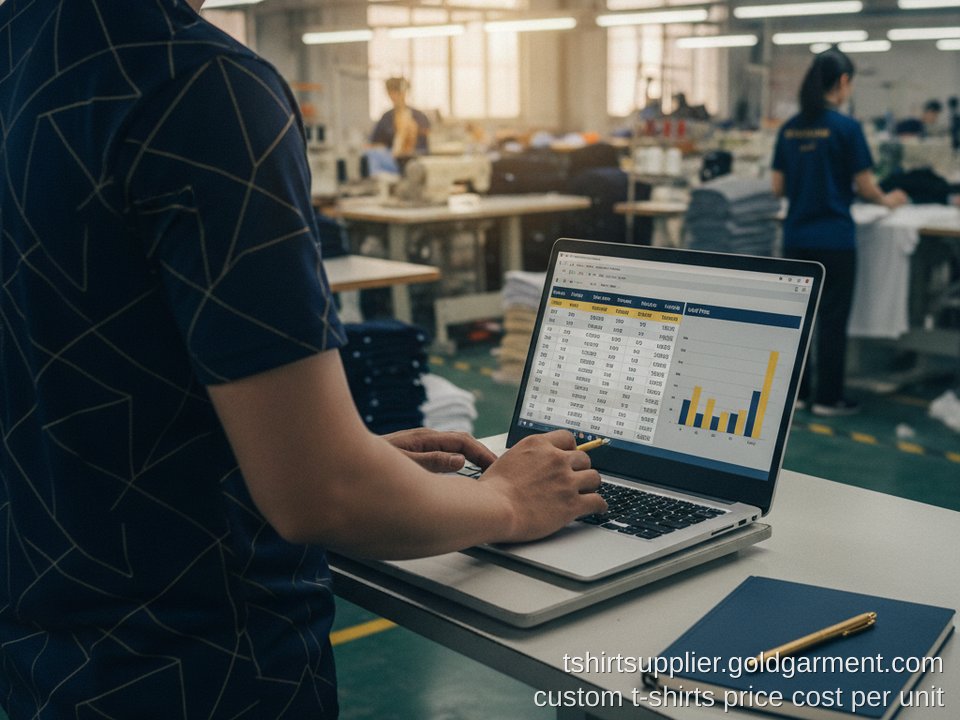
Custom T-Shirts Pricing Guide: What Affects the Cost Per Unit?
When embarking on a custom t-shirt production project, understanding the factors that influence the custom t-shirts price cost per unit is crucial for accurate budgeting and successful sourcing. As a leading t-shirt manufacturer based in Ho Chi Minh City, Vietnam, Gold Garment is dedicated to providing transparent pricing and high-quality production. This guide will break down the key elements that contribute to the final cost of your custom apparel, ensuring you can make informed decisions for your brand.
Navigating the world of apparel manufacturing can seem complex, but by demystifying the pricing structure, you can confidently partner with a reliable factory. Our aim is to equip you with the knowledge to evaluate quotes and understand the value behind each component of your order. This clarity is essential whether you're a startup seeking your first batch or an established brand scaling your production. We will explore everything from the raw materials to the finishing touches, offering insights into how each decision impacts your bottom line.
As a professional t-shirt manufacturer with over 10 years of experience, Gold Garment specializes in delivering exceptional value. We offer factory-direct pricing and operate with a manageable MOQ of 100 pcs per style, making us an ideal partner for businesses of all sizes. Our commitment to quality, coupled with our strategic location and efficient processes, allows us to offer competitive rates without compromising on the craftsmanship of your custom apparel. You can learn more about our manufacturing capabilities and commitment to quality by exploring our comprehensive guide at Gold Garment factory-direct pricing, which delves into the advantages of working directly with a factory.
Understanding the intricacies of custom t-shirts pricing will empower you to negotiate effectively and secure the best possible value for your investment. Let's dive into the core components that shape the cost of your custom t-shirts.
Key Factors Influencing Custom T-Shirt Cost Per Unit
The custom t-shirts price cost per unit is a multifaceted calculation. Several variables, from the fabric chosen to the embellishments applied, play a significant role. By understanding these elements, you can better anticipate costs and communicate your needs precisely to your chosen manufacturer. This detailed breakdown will help you optimize your budget and achieve your desired product quality.
1. Fabric Choice
The foundation of any t-shirt is its fabric, and this is a primary driver of cost. Different materials offer varying levels of comfort, durability, and aesthetic appeal, each with a distinct price point. Understanding the properties of each fabric is key to balancing quality and budget.
- Cotton: A popular and versatile choice, cotton's price can vary based on its type (e.g., organic, Pima, ringspun) and origin. Standard cotton is generally cost-effective, while premium varieties command higher prices.
- Polyester: Known for its durability and moisture-wicking properties, polyester is often used in athletic wear. Its cost is typically moderate.
- Blends (e.g., Tri-Blends): Combinations of cotton, polyester, and rayon offer unique textures and drape. These blends are often more expensive due to the complexity of their composition and manufacturing process.
- Performance Fabrics: Specialized synthetic materials designed for athletic or industrial use often come with a higher price tag due to their advanced technical properties.
For a comprehensive understanding of fabric options, refer to our custom t-shirts Fabric Guide: Cotton, Polyester, Tri-Blend & Performance Materials.
2. Garment Style and Construction
The design and construction of the t-shirt itself contribute significantly to the overall cost. More complex styles or those requiring additional features will naturally be more expensive.
- Basic Styles: Standard crew neck or V-neck t-shirts are typically the most economical.
- Specialty Styles: Styles like long sleeves, raglan sleeves, or shirts with unique cuts (e.g., scoop necks, asymmetrical hems) involve more intricate sewing and pattern work, increasing the price.
- Features: Elements such as reinforced stitching, specialized collars, or specific seam constructions add to the manufacturing complexity and cost.
Our T-Shirt Styles Guide: Crew Neck, V-Neck, Polo, Henley & Performance Explained offers a detailed look at various options.
3. Decoration and Printing Methods
The way you choose to brand your t-shirts is one of the most impactful factors on the custom t-shirts price cost per unit. Different printing techniques have varying costs associated with them, influenced by complexity, number of colors, and the desired finish.
- Screen Printing: A cost-effective method for large runs with a limited number of colors. Each color requires a separate screen and setup, so the cost per color decreases with higher volumes.
- Direct-to-Garment (DTG) Printing: Ideal for intricate designs with multiple colors or photographic detail, especially for smaller runs. While it offers great detail, it can be more expensive per unit for very large orders compared to screen printing.
- Heat Transfer Vinyl (HTV): Suitable for simple graphics, logos, or text, especially for smaller batches or personalization. The cost is often per design element.
- Embroidery: Offers a premium, textured look. The cost is typically based on stitch count and design complexity, making it generally more expensive than printing.
- Other Techniques: Specialty inks (e.g., puff, metallic), patches, and unique application methods can also add to the cost.
The complexity of your design, including the number of colors and the size of the print area, directly influences the labor and material costs for decoration.
4. Order Quantity (MOQ)
The principle of economies of scale significantly impacts the custom t-shirts price cost per unit. Larger orders generally result in a lower price per garment.
- Setup Costs: For methods like screen printing, initial setup costs are spread across more units when you order in bulk, reducing the per-unit price.
- Material Purchasing: Factories can often secure better prices on raw materials when purchasing in larger quantities, passing those savings on to you.
- Efficiency: Production lines are optimized for larger runs, leading to more efficient labor and reduced waste.
At Gold Garment, our MOQ of 100 pcs allows us to offer competitive pricing even for smaller to medium-sized orders, providing flexibility for various business needs. Understanding the impact of volume is critical for maximizing your budget. For more on this, our article on Minimum Order Quantity for custom t-shirts: What Every Brand Needs to Know is a valuable resource.
5. Sourcing Location and Manufacturing Standards
Where your t-shirts are manufactured plays a role in pricing. Factors like labor costs, raw material availability, and logistical efficiencies contribute to the overall cost-effectiveness of production. Vietnam, as a major apparel manufacturing hub, offers significant advantages.
- Labor Costs: Competitive labor rates in countries like Vietnam can lead to lower manufacturing costs compared to Western countries.
- Supply Chain: Established supply chains for fabrics and accessories in manufacturing regions streamline production and can reduce lead times and costs.
- Expertise: Experienced manufacturing hubs often have highly skilled workforces and efficient processes honed over years of production.
As a Vietnam-based manufacturer, Gold Garment leverages these advantages to provide excellent value. For instance, a real example from Gold Garment corporate t-shirt manufacturer Vietnam demonstrates our capability to handle significant orders efficiently and cost-effectively for businesses worldwide. We serve clients across the USA, Europe, Australia, and Southeast Asia, ensuring reliable worldwide shipping.
6. Additional Customizations and Finishing
Beyond the basic printing, several finishing touches can enhance your t-shirts but also add to the cost.
- Custom Labels and Tags: Replacing standard tags with your own branded labels involves an additional step and material cost.
- Special Finishes: Treatments like garment dyeing, enzyme washes, or softening processes can alter the feel and appearance of the fabric, but they come with an added expense.
- Packaging: Individual poly-bagging, custom hang tags, or special folding require extra labor and materials.
- Quality Control and Inspection: While essential for ensuring quality, rigorous inspection processes can add to the overall cost if they go beyond standard checks.
These details, while seemingly minor, contribute to the overall perceived value and final price of your custom apparel.
7. Turnaround Time and Rush Orders
Standard production timelines are factored into the pricing. If you require your custom t-shirts on an expedited schedule, this often incurs rush fees.
- Prioritization: Rush orders often require the factory to reallocate resources, potentially disrupting normal production flow.
- Overtime: To meet tight deadlines, factories may need to schedule overtime for their staff, which increases labor costs.
- Logistics: Expedited shipping or specialized logistics might be necessary to ensure timely delivery, adding to the overall expense.
Planning your orders well in advance is the best way to avoid these additional costs and ensure a smooth production process. Understanding the manufacturing process can also help in planning, as detailed in our guide on How custom t-shirts Are Made: The Complete Manufacturing Process Step-by-Step.
8. OEM vs. Private Label Considerations
The manufacturing model you choose can also influence pricing. Whether you opt for OEM (Original Equipment Manufacturer) or private label services, each has its implications.
- OEM: This typically involves producing a product based on your provided specifications and designs. The cost is primarily for the manufacturing of your unique product.
- Private Label: This might involve using existing garment templates and adding your branding, or it could involve more extensive design input from the manufacturer. The pricing structure might differ based on the level of customization and design services included.
For a deeper dive into these models, our article on OEM vs Private Label custom t-shirts Manufacturing: Which Model Fits Your Brand? provides valuable insights.
Frequently Asked Questions
Q: How does the MOQ affect the cost per unit?
A: The Minimum Order Quantity (MOQ) significantly impacts the custom t-shirts price cost per unit. Larger order volumes allow manufacturers to spread fixed costs (like setup for screen printing) across more units, reduce material purchasing costs, and optimize production efficiency. This generally leads to a lower cost per unit for higher quantities. Gold Garment's MOQ of 100 pcs offers a good balance for many businesses.
Q: Is it always cheaper to order custom t-shirts in bulk from Vietnam?
A: Generally, yes, ordering custom t-shirts in bulk from Vietnam can be more cost-effective due to competitive labor costs, established supply chains, and efficient manufacturing processes. However, the overall bulk tshirt price Vietnam will still be influenced by the factors mentioned above, such as fabric, printing method, and complexity of the design.
Q: How can I get the most accurate quote for custom t-shirts?
A: To receive the most accurate quote, provide your manufacturer with as much detail as possible. This includes the desired fabric type, garment style and color, quantity, artwork for printing or embroidery (including size and placement), desired printing method, and any special finishing requests. Clear specifications help in precise cost calculation.
Q: What is the difference between t-shirt OEM cost and standard pricing?
A: The t-shirt OEM cost refers to the price of manufacturing a t-shirt according to your exact specifications, including your designs and potentially unique construction details. Standard pricing might refer to generic t-shirts or those with less customization. OEM pricing is typically tailored to the specific requirements of your custom product.
Understanding these pricing variables empowers you to make informed decisions and budget effectively for your custom t-shirt production. Partner with Gold Garment for transparent pricing and high-quality manufacturing.
📩 Request a Free Quote — Response Within 5 Minutes
🌎 Website: tshirtsupplier.goldgarment.com
Factory-direct pricing · MOQ from 100 pcs/style · Sample development · Worldwide shipping
.jpg)
.jpg)
.jpg)
Nhận xét
Đăng nhận xét